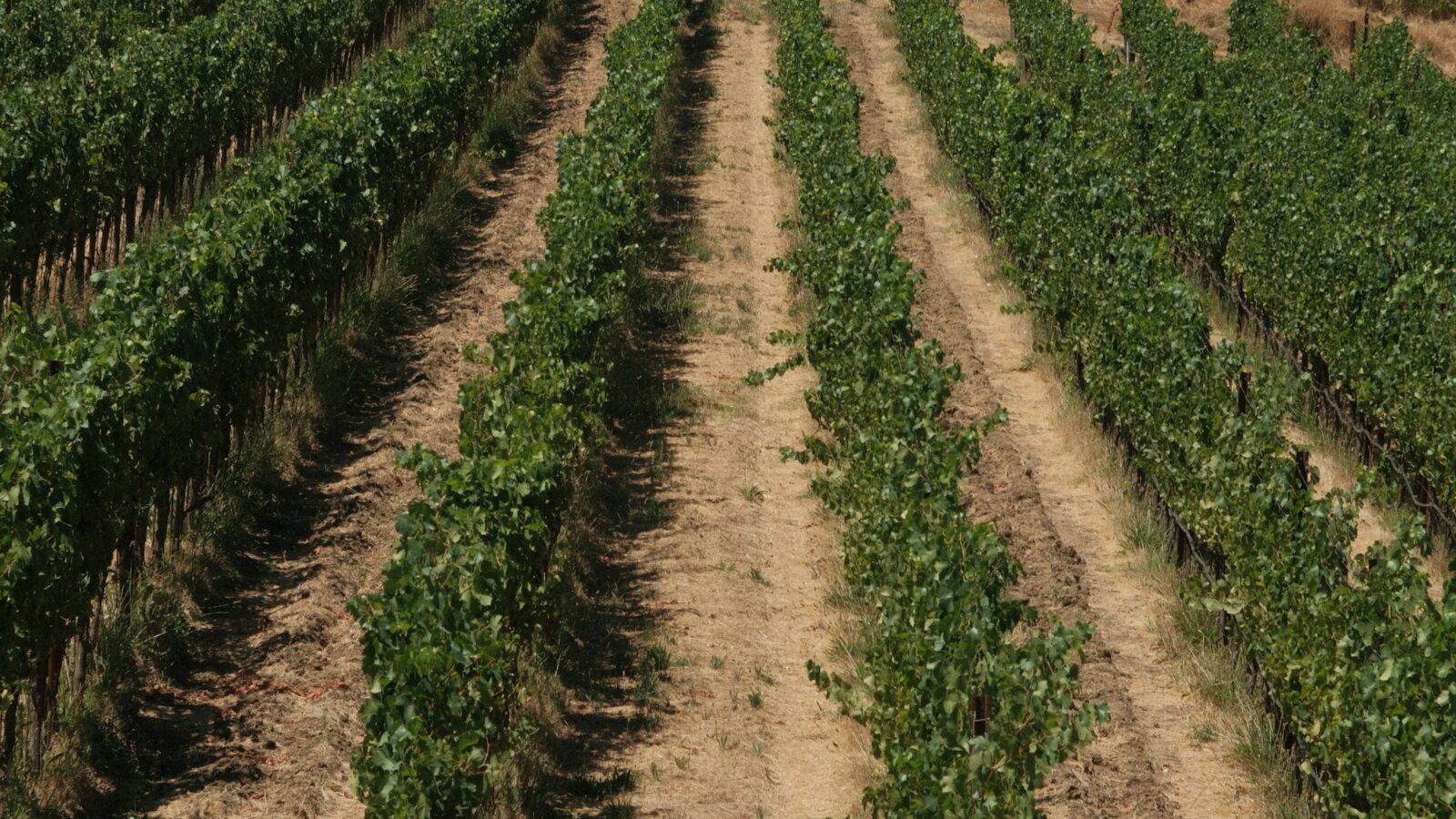
Albariza is a white, chalky, limestone-heavy soil best known from Jerez, in southern Spain, where it’s famous for growing the Palomino grapes behind sherry. It’s not native to Ballard Canyon — the estate is named after the resemblance, not a literal import of Spanish dirt — but the calcareous soils here share enough of albariza’s real properties to justify the name.
Why chalky soil matters to a vine
Limestone and chalk soils drain unusually fast and reflect a surprising amount of sunlight back up into the fruit canopy, both of which change how a vine behaves. Fast drainage means the roots have to work for water rather than sitting in it, and that mild, consistent stress tends to produce smaller berries with a higher skin-to-juice ratio — more concentrated flavor, less dilution.
What it does for white wine specifically
Calcareous soils have a long association with structured, mineral-driven white wine — Chablis and Sancerre both sit on limestone for a reason. The soil itself doesn’t literally transfer “minerality” into the glass the way that’s sometimes described, but the drainage and reflected light it produces do shape ripening in a way that tends toward brighter acidity and a firmer backbone, which is exactly what a Chenin Blanc or Chardonnay needs to avoid tasting flat or purely fruity.
Farming white ground on purpose
Not every vineyard in Ballard Canyon sits on this kind of soil — plenty of the AVA is planted on sandier, more alluvial ground that suits different varieties. Albariza House was planted specifically on the calcareous pockets of the canyon because the estate wanted Chenin and Chardonnay with real structure, with a little Syrah planted only where the ridge warms enough to ripen a red properly.
Taste what grows in this soil for yourself — reserve a tasting on the patio, or browse the current releases.