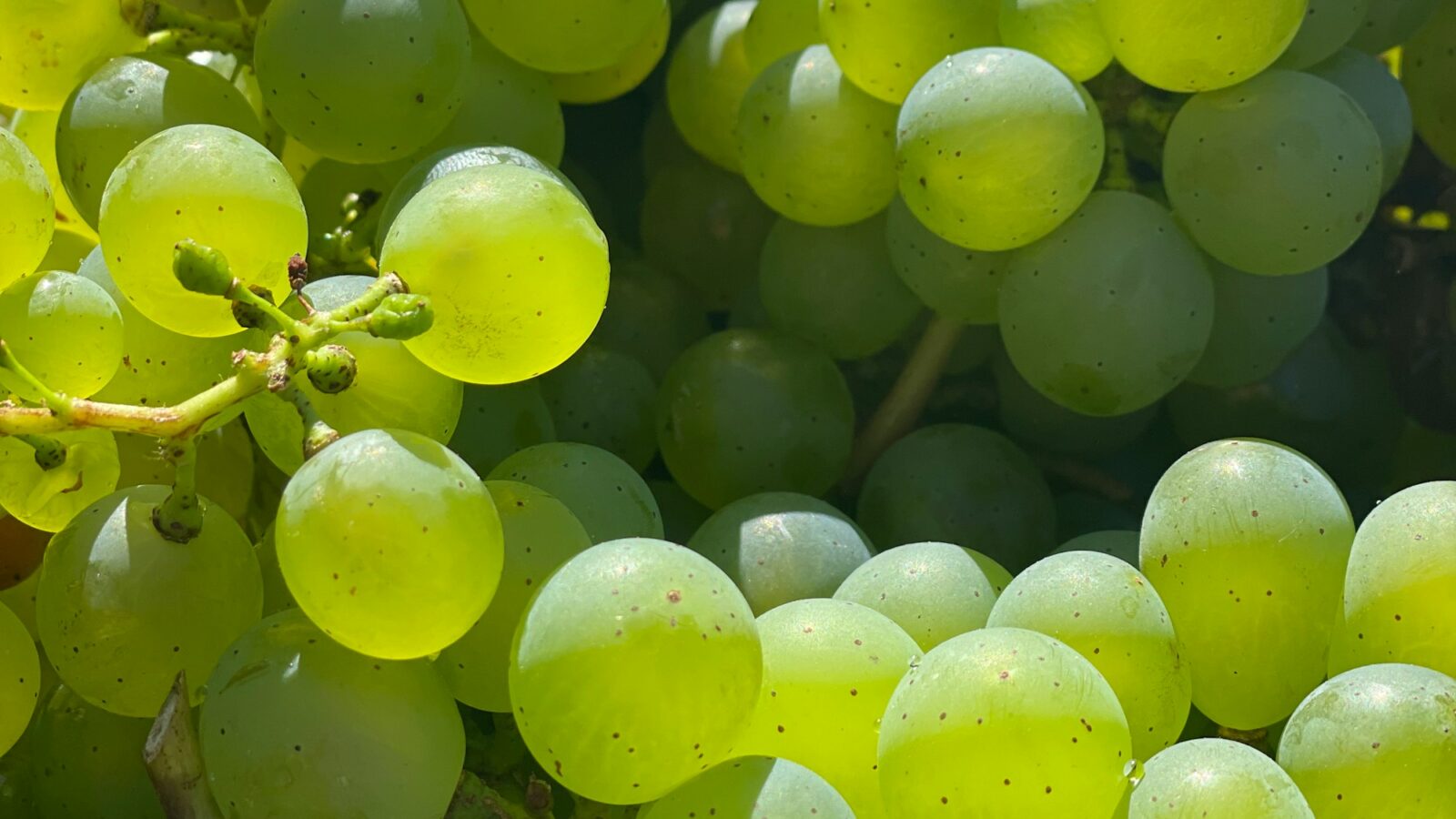
Chenin Blanc isn’t the grape most people associate with Santa Barbara County. Rhône varieties and Burgundian Chardonnay get most of the attention here, and Chenin is more often tied to the Loire Valley than to Ballard Canyon. Albariza House planted it anyway, on the theory that the estate’s calcareous soil suited the grape better than its reputation suggested.
A grape that needs somewhere to hide its sugar
Chenin Blanc ripens with naturally high sugar and can lose acidity fast once it does, which is part of why it struggles in genuinely hot sites — it either gets picked underripe to save the acid, or it ripens fully and turns flabby. A cooler, chalky site like this one lets the fruit hang longer without that acid collapse, which is closer to the balance the grape can achieve in its best Loire expressions.
What the soil adds beyond acid
Limestone and chalk soils are also associated with a particular waxy, honeyed texture in Chenin once it’s fully ripe — a character distinct from the greener, more citrus-driven Chenin that comes off sandier or more fertile ground. Ballard Canyon’s calcareous pockets seem to push the variety toward that same textural direction, even an ocean and a very different climate away from the Loire.
Why it’s worth planting a grape against expectation
Planting Chenin in a region known for Syrah and Grenache is a harder sell than following the region’s own reputation. The bet at Albariza House is that a specific piece of ground should decide what gets planted on it, not what the surrounding AVA is best known for — and that a chalky hillside built for structured whites shouldn’t sit under a red variety just because that’s what the neighbors are known for.
Try the current Chenin release, or come taste it against the estate Chardonnay side by side.